Electric vehicles run on electric power, making their charging process a topic of curiosity and confusion for many. In this article, we aim to dispel common misconceptions and provide clarity on key aspects such as: What types of charging stations are available? How do they differ? And how quickly can an electric vehicle be recharged?
Charging an electric vehicle (EV) reliably requires a good understanding of the power sources and charging options available. In Nigeria, where infrastructure and energy challenges exist, the choice of charging system becomes even more critical for sustainable EV adoption. Let’s explore the types of charging stations available, debunk common misconceptions, and discuss how charging times vary under local conditions.
Types of Electrical Current
Two main forms of electricity power our devices and vehicles:
Alternating Current (AC) and Direct Current (DC)
Alternating Current (AC)
AC is the standard electricity delivered by Nigeria’s national grid. It is ideal for transmitting power over long distances due to minimal energy loss. Standard AC voltage in Nigeria typically ranges from 220 to 240V at 50 Hz, making it compatible with most EV chargers.
Direct Current (DC)
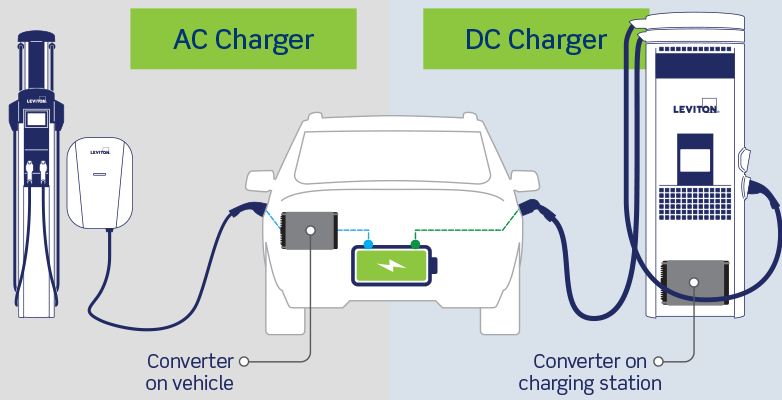
DC powers electronic devices and EV batteries by storing energy in a chemical form. Since batteries rely on DC for charging, any incoming AC must first be converted. This is handled by either the vehicle’s on-board charger or an external DC charger.
AC Charging: A Practical Solution for Nigerian EV Owners
When using an AC charging station, the vehicle’s on-board charger converts the AC power into DC before storing it in the battery. The efficiency of this process depends on the capacity of the on-board charger and the power supply’s phase (single or three-phase).
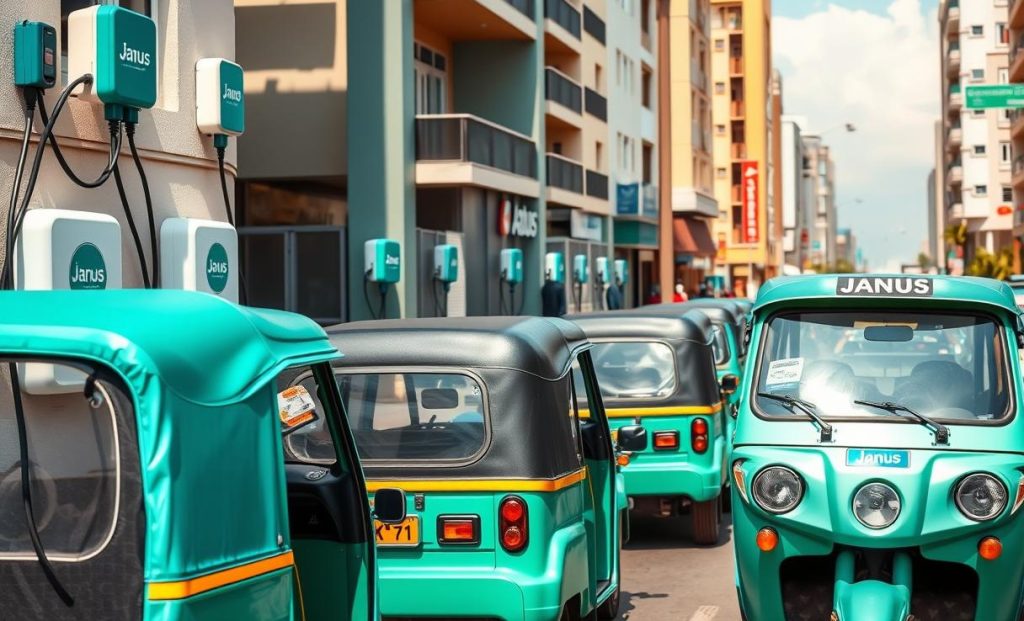
AC Charging Stations in Nigeria
Affordability: AC chargers are significantly cheaper, costing 7 to 10 times less than DC fast chargers.
Ease of Installation: Compact and easy to install, they are suitable for home use, particularly for overnight charging.
Speed: AC chargers can deliver up to 22 kW of power. For instance, fully charging a 21 kWh battery can take about an hour, assuming an adequate power supply and a compatible on-board charger.
Despite their slower charging speeds, AC chargers are ideal for residential areas and workplaces in Nigeria, where cost-effectiveness and accessibility are priorities.
DC Charging: Fast Charging for Long-Distance Travel
DC chargers bypass the vehicle’s on-board system, delivering power directly to the battery. This eliminates the need for conversion, enabling faster charging.
DC Charging Stations in Nigeria
Performance: Typical DC chargers deliver 50 kW, while ultra-fast stations offer up to 150 kW.
Cost: The technology is complex and expensive, limiting widespread adoption.
Use Case: Ideal for EV users embarking on long-distance trips, DC chargers can charge a vehicle in minutes instead of hours.
In Nigeria, DC fast chargers are best suited for deployment along major highways, connecting cities like Lagos, Abuja, and Port Harcourt. These stations are critical for enabling seamless intercity travel with EVs.
Striking a Balance: AC for Daily Use, DC for Occasional Needs
For Nigerian EV users, a mixed strategy is recommended:
AC Charging at Home: Cheaper and gentler on the battery, prolonging its lifespan.
DC Charging for Long Trips: Faster but should be used sparingly to maintain battery health.
Overcoming Challenges in Nigeria
1. Electricity Stability: Nigeria’s grid challenges make it essential to combine charging infrastructure with solar panels or energy storage systems for reliability.
2. Public Awareness: Educating Nigerians about the benefits of EVs and available charging options will foster adoption.
3. Policy Support: Government incentives and private-sector partnerships can accelerate the rollout of both AC and DC charging stations nationwide.
Conclusion
Adopting EVs in Nigeria requires careful planning, especially when it comes to charging infrastructure. While AC chargers are ideal for affordable, everyday use, DC chargers are crucial for supporting long journeys. By balancing both systems and addressing Nigeria-specific challenges, we can pave the way for a more sustainable and electrified future.
Visit [myev.ng](http://myev.ng) for more information on electric mobility solutions tailored for Nigeria!