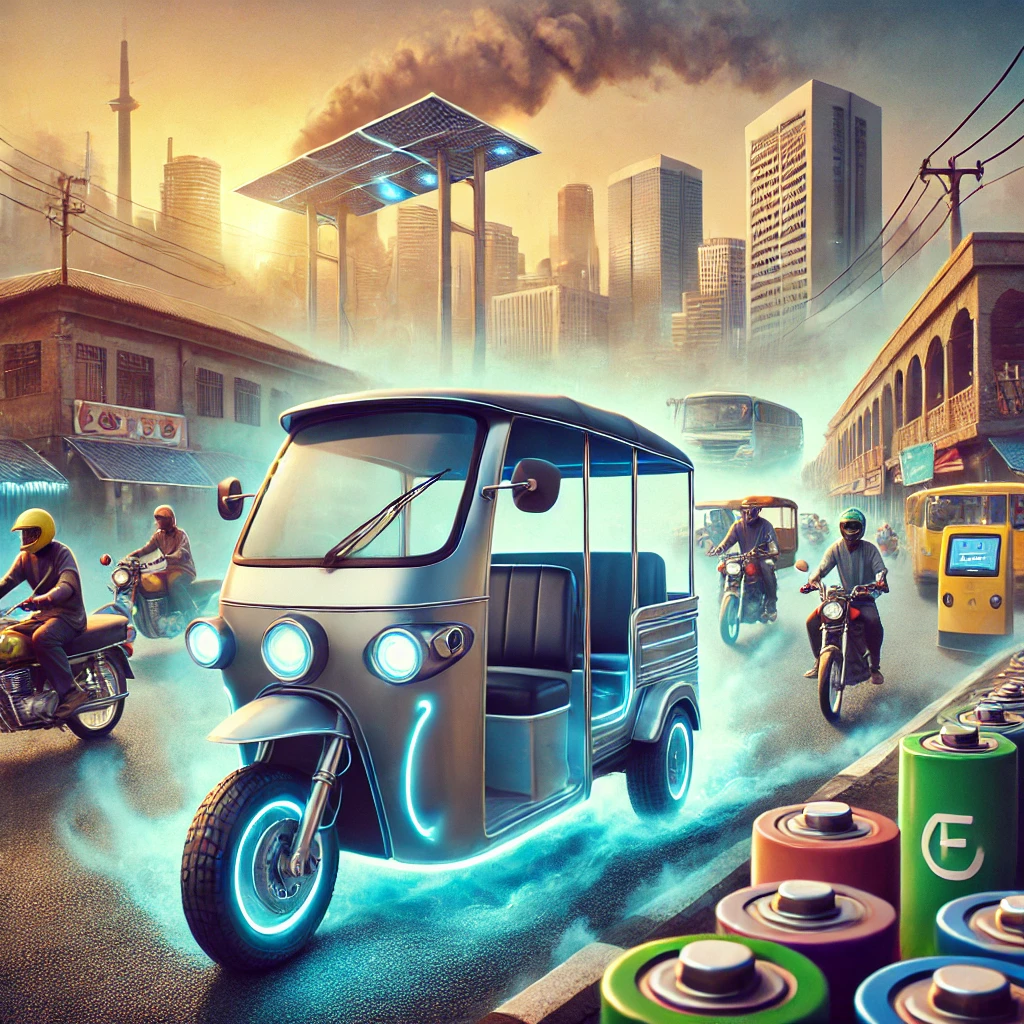
Transportation electrification is a key component of Nigeria’s broader decarbonization strategy. At COP26, Nigeria committed to achieving carbon neutrality by 2060, with an ambitious goal set by the Energy Transition Plan (ETP) to deploy 13 million electric vehicles—60% of the country’s total vehicles—by 2050, and full deployment by 2060.
A recent report by Sustainable Energy for All’s Nigeria Energy Transition Office (ETO) and RMI (Rocky Mountain Institute) reveals Nigeria’s vast potential for economic growth through the production and adoption of electric vehicles (EVs).
As Africa’s most populous nation, Nigeria’s economy heavily depends on oil, gas, and agriculture. However, the transportation sector, critical for economic development, faces challenges, especially as transportation costs rise following the removal of the fuel subsidy.
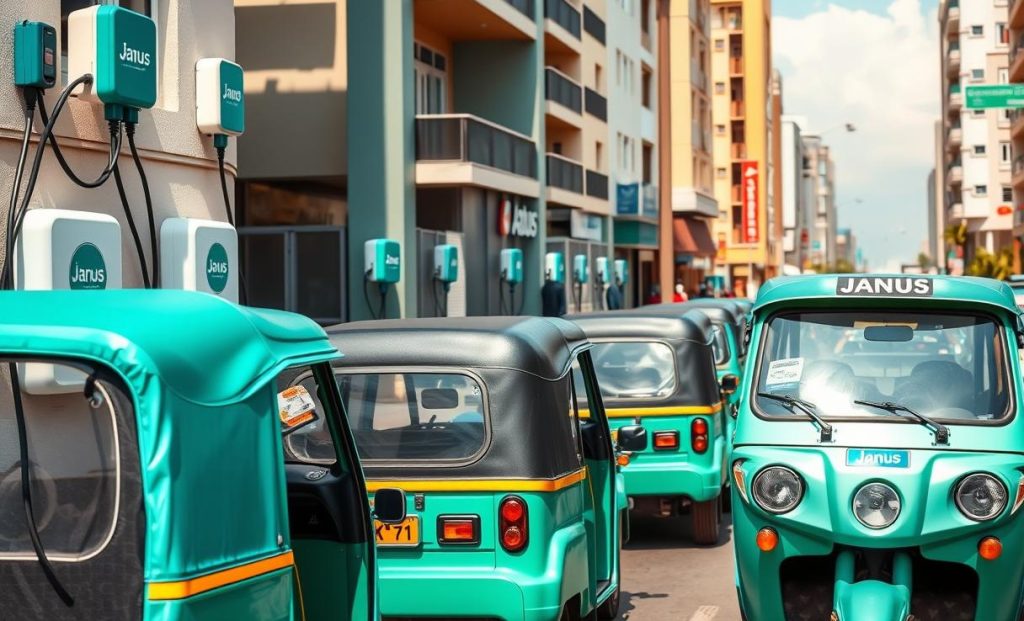
At Janus, we see this as a tremendous opportunity to contribute to Nigeria’s transition to electric mobility. By focusing on electric tricycles (e-Keke), Janus is helping to revolutionize Nigeria’s transportation landscape.
Our efforts are aligned with the country’s decarbonization strategy and commitment to carbon neutrality. Through initiatives such as the sale of new electric tricycles, retrofitting internal combustion engine (ICE) tricycles to electric, enabling Vehicle-to-House (V2H) technology, and providing battery management services, we aim to lower transportation costs, create jobs, reduce pollution, and provide a more affordable and sustainable future for Nigerians.
In conclusion, we at Janus are poised to lead in the transition to electric vehicles, capitalizing on the rapidly growing cost-savings of e-mobility compared to traditional gas-powered vehicles, while contributing to a cleaner and more sustainable transportation future for Nigeria.