
Exploring On-Board Chargers
As electric vehicles (EVs) gain traction globally, Nigeria is gradually joining the EV revolution. However, one critical component that often goes unnoticed is the on-board charger (OBC), an essential piece of technology that dictates how efficiently your electric car charges. The speed of charging your EV depends on three components: the charging station, the charging cable, and the on-board charger. Among these, the OBC is the least understood, yet it plays a pivotal role in determining how long it will take to fully charge your EV.
Charger
The word charger can be confusing. Since the charging station is commonly called a charger, it needs to be clarified that there are two types of chargers:
-
- On-board charger (OBC) that is built in the car
-
- Charging station (also called a charger that can be either AC or DC)
Understanding the Basics of EVs Charging
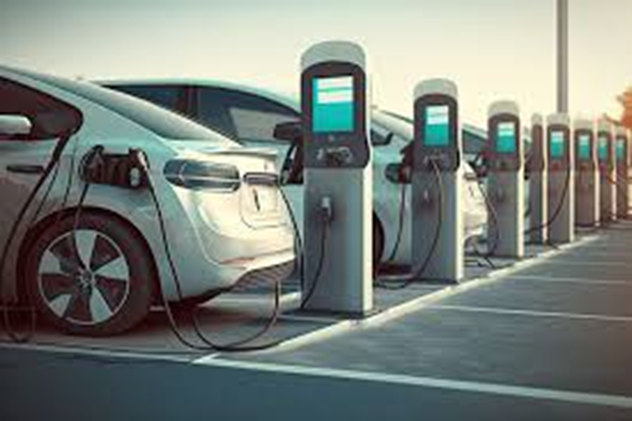
Electric vehicle (EV) charging involves two primary types of electrical current: alternating current (AC) and direct current (DC). Each type follows a different process for powering your vehicle’s battery.
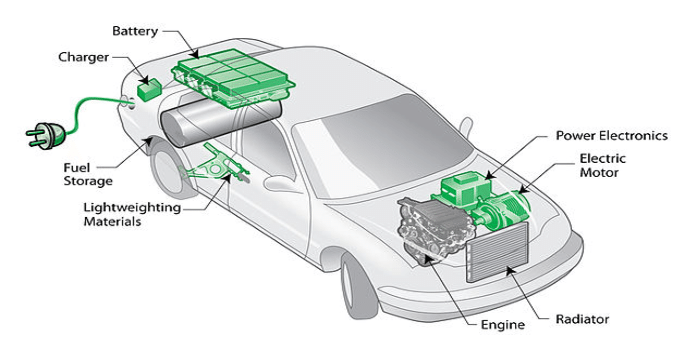
When AC power is used—whether from a household outlet or an AC charging station—the electricity flows through the charging cable to the vehicle’s on-board charger (OBC). The OBC then converts the AC power into DC, which is the form of electricity that EV batteries can store. This DC power is then managed and distributed to the battery through the Battery Management System (BMS) in side the EV battery, ensuring safe and efficient charging.
When DC power is used, the vehicle’s on-board charger (OBC) is bypassed, allowing the electricity to flow directly into the battery. While this allows for faster charging, frequent DC charging can accelerate battery wear. DC charging process doesn’t manage the rate at which current and voltage is sent to the battery and a such generates extra heat, which, over time, can degrade the battery’s lithium-ion cells, leading to reduced capacity and efficiency. This thermal stress also hastens the decline of the electrolyte and other internal battery components, so it’s recommended to use DC charging only occasionally to preserve battery health.
What Is the Role of an On-Board Charger?
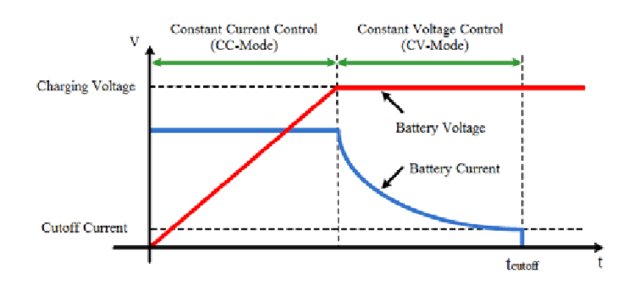
The on-board charger (OBC) plays a vital role in managing the current and voltage at which an electric vehicle’s battery is charged, ensuring optimal performance and longevity. This is done through two modes: Current Control Mode and Voltage Control Mode, both of which are crucial for maintaining the battery’s health.
As illustrated in the diagram below, the OBC operates in either constant current or constant voltage mode, each with its own set of benefits and challenges:
-
- In constant current charging, the OBC supplies a steady current to the battery, which results in faster and more efficient charging. However, if not managed properly, it can lead to overcharging in the later stages, potentially reducing the battery’s lifespan.
-
- In constant voltage charging, the voltage remains fixed while the current gradually decreases as the battery charges. While this approach prevents overcharging, it can cause excessive current to flow into the battery at the start, overheating it and, again, shortening its lifespan.
To balance these risks, the OBC employs a charging strategy: it starts the process with constant current to achieve efficient charging, and once the battery reaches a specific voltage level, the charger switches to constant voltage. This strategy ensures the battery is charged safely and efficiently, maximizing its lifespan while maintaining charging speed.
In markets like Nigeria, where the power supply can be inconsistent, the role of the OBC becomes even more important, as it protects the battery from fluctuations and surges, further contributing to its longevity.
Types of On-Board Chargers
On-board chargers (OBCs) for electric vehicles (EVs) can be categorized based on the number of electrical phases they can utilize and their power output. In Nigeria, where the power infrastructure is diverse, understanding the types of OBCs available can help you choose an EV that matches the local power supply, whether at home or using public charging stations.
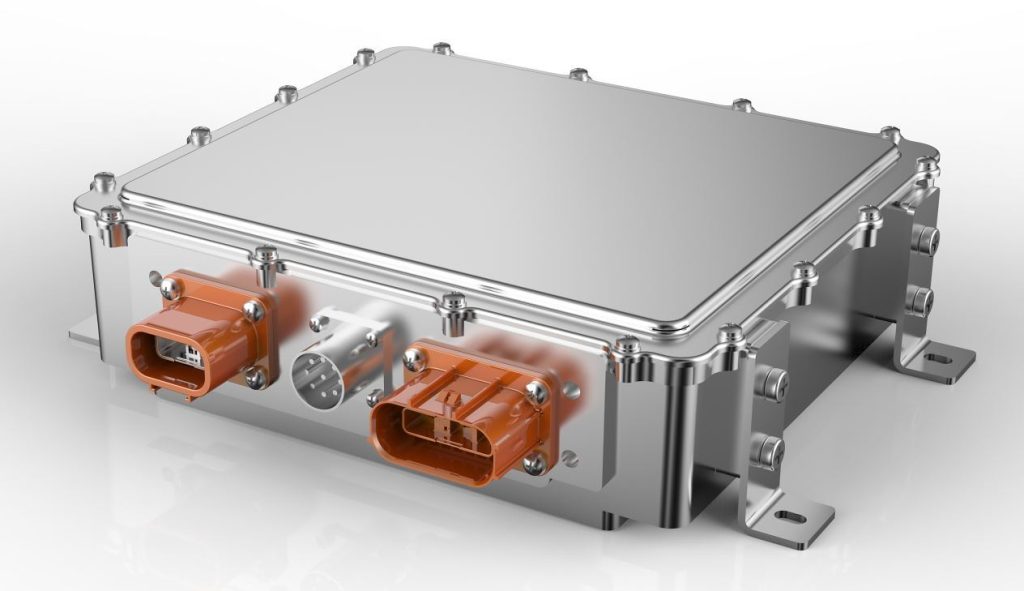
The standard AVID on-board charger offers flexibility in its power output depending on the available electrical phases. If connected to a single-phase supply, the charger operates at 7.3 kW. However, when connected to a three-phase supply, it can deliver up to 22 kW. This charger is smart enough to automatically detect whether it is connected to a single-phase or three-phase power source, allowing it to adjust accordingly.
When connected to a home AC charging station with a 22 kW output, the overall charging time will primarily depend on the capacity of the EV’s battery.
The charger can accept input voltages ranging from 110 V to 260 V AC for single-phase connections, and 360 V to 440 V AC for three-phase setups. The output voltage supplied to the battery ranges from 450 V to 850 V, ensuring it can efficiently power a wide range of battery types.
Summary
Selecting the right EV charging station in Nigeria requires considering the type of vehicle, the grid capacity, and the potential for future upgrades. Since many homes in Nigeria operate on lower power grids, it’s essential to get an AC charging station that won’t overload your connection. Ensure it’s compatible with local electricity regulations and capable of providing safe charging despite voltage fluctuations. Installation by a qualified technician is crucial for safety, and you may want to consider solar options for greater reliability.
To know more about Designing a Residential PV Power System with Battery Energy Storage, you can read more here: